
Denver Metro
A Better Home Search Starts by Eliminating What Doesn’t Work
Build better search criteria, learn from the homes you see, and narrow your options to a useful shortlist.
Jackson Granger · · Updated · 9 min read

Look, I get it. I’ve used those Zillow filters, too. Set a price range, choose an area, add the bedrooms and garage spaces, and see what comes back.
But what if the way you’ve set up the search is part of what’s making it frustrating?
Some filters protect a real need. Others may rule out a home before you’ve had a chance to understand whether it could work. A search area that’s too broad can leave you sorting through places you’d never seriously consider.
Before adding more saved homes, I’d look at the search itself with you. What does each filter represent? Which limits need to stay firm? Where might another layout or feature meet the same need?
From there, we can eliminate homes for clear reasons and keep a rolling shortlist of the strongest options. You don’t have to choose a home to buy every time you open a listing.
The Granger takeaway
A useful home search should gradually give you fewer options and better reasons for keeping them.
Give the search some boundaries
Start with what the move has to accommodate: where you need to be, when you need to move, and what you can comfortably spend. Those needs give us a basis for deciding which filters belong in the search.
The price filter won't tell you the full cost. Include principal and interest, taxes, insurance, any mortgage insurance, and HOA dues. Leave room for maintenance, utilities, and repairs, too. The Consumer Financial Protection Bureau's homebuying budget guidance is a useful place to start.
I'd work with your lender on payment estimates for the properties you're considering and the cash needed to close. Then there's a separate question for you: how much do you want left afterward?
A firm limit on your total housing cost should stay firm. The point is to question assumptions about the home, not talk you into a payment you can’t comfortably carry.
Timing matters just as much. A relocation, divorce, death in the family, caregiving need, or expiring lease may leave little room to wait. The search has to fit the time you have.
We begin with homes that could reasonably meet your needs. As we learn more, we remove the ones that don’t. An unanswered question stays open until we investigate it.
You stay in control. The strongest options become a rolling shortlist, with clear reasons for keeping each one. Before considering an offer, you should understand why you want the home, what you’re giving up, and what still needs checking.
From possibilities to a rolling top three
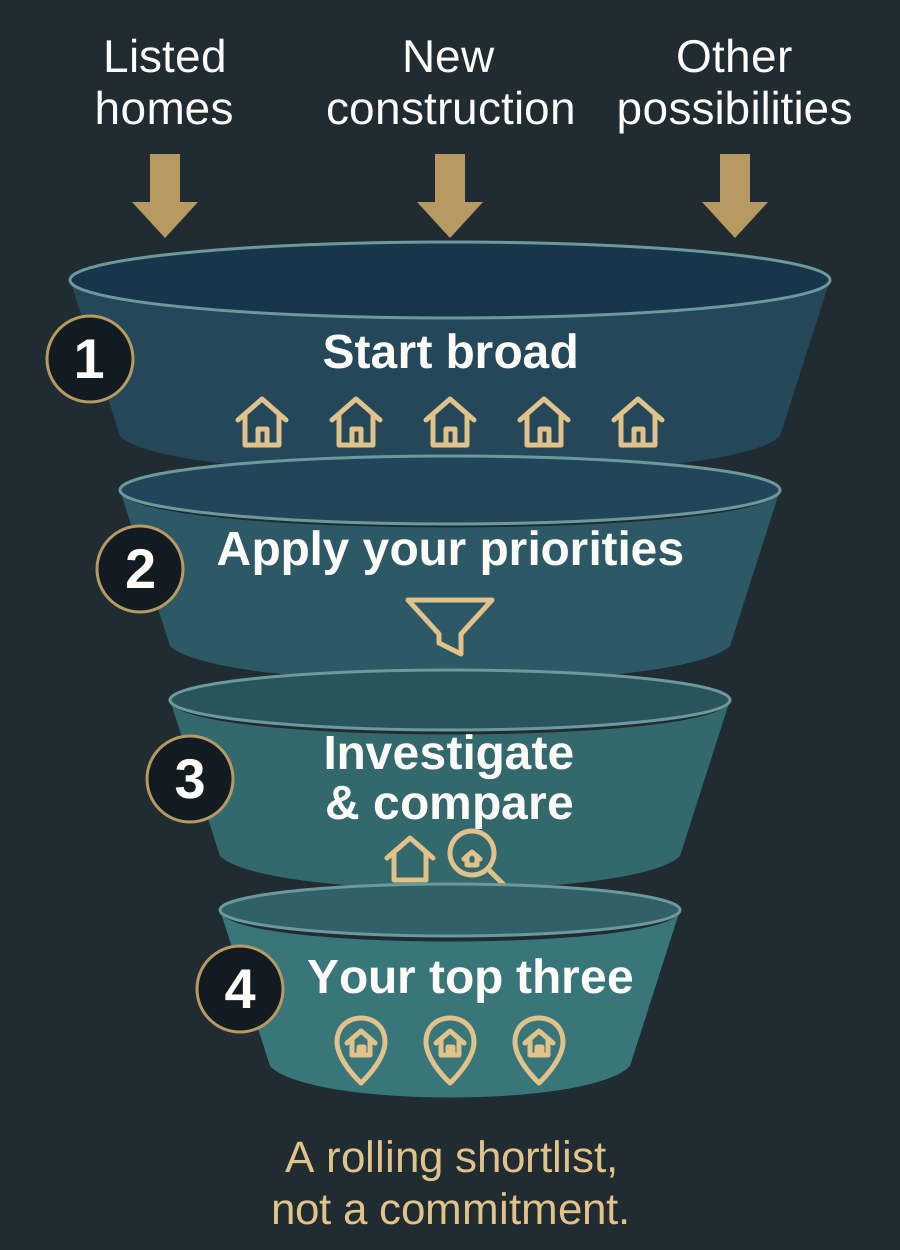
Three conceptual categories, Listed homes, New construction and Other possibilities, feed downward arrows into four curved, numbered stages: 1 Start broad; 2 Apply your priorities; 3 Investigate & compare; 4 Your top three. Decorative house, filter and investigation symbols lead to three home pins representing a rolling shortlist of up to three homes, not a commitment. The categories do not promise access, and the icons are not market counts.
If every plausible home drops out for the same reason, it's worth revisiting the search. Could another property type work? Does the budget cover the features you're asking for? Repeated disappointments can show us where the mismatch is.
Consider reasonable alternatives, including relevant resale and new-construction homes. Investigation starts early and continues through the contract process.
Find the reason behind each filter
Suppose you ask for a three-car garage.
What needs to fit inside it? Two vehicles, bikes, skis, and tools? A workshop? A truck that's too long for your current garage?
A deep two-car garage with good storage might work for one of those needs. Someone who needs a separate workshop would have different questions about space and permitted use. The garage count alone doesn't tell us enough.
If storage is the real need, a three-car-garage filter could exclude a home worth investigating. We could consider two-car options, then check dimensions and storage in the listings or at a showing. If you truly need three vehicle spaces, we keep that requirement.
Is this feature the goal, or is it one way to accomplish the goal?
Four bedrooms might be your way of asking for a quiet office. A separate enclosed workspace might meet that need. We’d still need to check the layout rather than assume every home with fewer bedrooms would work. A large yard could mean gardening space or privacy from the neighbors.
Some requirements won't change. If you need step-free access and main-level living, a beautiful upstairs bedroom won't help.
If you're buying with someone else, write your priorities separately, then compare them. I'd rather talk through a disagreement before a showing than while we're standing in a house one of you loves.
Let each showing improve the next search
After a tour, ask what you learned.
Maybe the large yard looked appealing until you pictured spending your weekends maintaining it. Or a smaller home surprised you because the layout worked so well.
Write down the reason. "Didn't like it" won't help much next time. "The only place for an office is beside the television" will.
Then use the lesson to adjust the search. A smaller yard may deserve consideration after all. If a quiet office is essential, look more closely at floor plans before booking the next showing.
If the commute matters, try it at the time you'd usually travel, where practical. A drive across Denver Metro on a quiet Sunday may tell you very little about your workday. That can help you draw a more useful search area.
Keep those notes. If the price drops or new information answers a concern, you'll know whether the home deserves another look.
If we’re waiting on an insurance estimate or an HOA document, decide who’s getting it and when we’ll revisit the home. Keep it marked as unresolved until there’s enough information to judge the concern.
Keep a rolling top three
Once you have credible options, keep a shortlist of up to three homes.
Each promising new home gets compared with those already on the list, using the priorities you established. What does it do better? What would you give up? If it earns a place, record why another home dropped out.
For each contender, keep three notes: why it remains, the trade-off you’d be accepting, and the next question to answer. You shouldn’t have to reconstruct every showing from memory.
Three is a working limit. Adjust it if it stops helping, and remove homes that are no longer available. Leave a space empty rather than fill it with a home that fails an essential requirement.
Being the strongest option so far earns a home closer review. It doesn’t obligate you to buy it.
Give each worry a useful question
Before deciding on an offer, I'd want to talk through these concerns.
What if we lose the home? Check availability and any reported offer deadline, then work out what we can investigate in that time. Discuss your spending limit, proposed terms, and protections before responding. The home may sell to someone else. You still need an offer you're comfortable making.
What if something better comes along? It might. What would "better" mean to you: a shorter commute, lower costs, or a different layout? Compare that with the homes we've found and the time you have to keep looking.
What if we pay too much? I'd compare relevant recent sales and current alternatives, accounting for condition, features, concessions, and terms. The CFPB explains why methods and timing can produce different opinions of value. That analysis can inform your offer; it can't promise an appraisal result or future resale price.
What if something is wrong with it? Identify the concern and who can assess it. Disclosures, inspections, records, and specialist advice answer different questions. Liking a home at a showing tells us little about the condition of its roof or foundation.
A favorite still has to hold up
Once a home earns a place on the shortlist, I’d prepare a comparative market analysis to help you assess its value, then work through the proposed price, terms, dates, inclusions, and contingencies with you. A favorite still has to hold up under closer review.
I'd help arrange an independent inspection and appropriate follow-up. An inspection evaluates condition; an appraisal addresses value. The CFPB's Inspection guidance also explains why needed repairs can matter to your financing. Bring the lender into that conversation early.
For an HOA property, request available governing documents and financial records. Can you use the home as intended? What maintenance is yours? Is money set aside for planned work? Colorado's guide to governing documents and Fannie Mae’s HOA guidance explain what to look for in the rules and finances.
Ask an insurance professional about coverage for the address, including cost, deductibles, and exclusions. Hail, wildfire, flood, and any association policy may affect the questions you need to ask. Colorado's insurance toolkit can help you prepare.
Some answers are available before an offer; others require access or work after signing. Put inspection, financing, appraisal, title, HOA, and insurance reviews on a calendar tied to the actual contract. Ask your broker or attorney which rights, notices, and deadlines apply before assuming you can object or end the purchase.
My role also includes coordinating the steps from the search through closing: keeping track of documents, appointments, questions, and contract deadlines. Technical, legal, lending, insurance, tax, and title conclusions need the appropriate professionals. If the findings change your willingness to buy, revisit the decision with the contract’s terms in mind.
My Colorado buyer-services page explains how I organize that work, from the first conversation through closing.
How do you know when you have seen enough?
Can you explain why the leading home works for you, what the alternatives offer, and which trade-offs you're willing to accept? Do you understand the likely payment and cash commitment? Do you know what's still unanswered and when you need those answers?
This is where the search moves from elimination to selection. You can decide whether you want to own a particular home, with reasons for choosing it and an understanding of its trade-offs. There’s no required number of showings, and you can decide that none of the current options works.
If you're unsure, try a scale from one to ten: one means you're just beginning; ten means you'd like to find a home now. Then explain your number. What would need to become clear for you to feel ready?
An insurance question needs an insurance answer. A disagreement about location needs a conversation. Another afternoon scrolling through listings may not resolve either.
When a moving deadline is close, investigate the questions most likely to rule out a home first. Discuss a fallback housing plan where feasible, including its costs. That can help you assess your choices if none of the available homes meets your essential needs.
Before your next showing
Before opening another listing, write down your three most important housing needs. If you’re buying together, do this separately first.
Beside each need, note which search filter you’re using to represent it and why. Is that filter essential, or could another feature or layout meet the need?
Keep firm boundaries for what you can comfortably spend, your timing, and any essential access or living requirements. Mark the assumptions you’re willing to investigate.
Use those notes on the next home. Rule it out for a specific reason, identify what you need to learn, or keep it for comparison. Then decide whether anything you learned should change the next search.
Talk through my shortlist
If your search keeps turning up the wrong homes, send me up to three listings you’ve saved and what attracted you to each. We can look at your filters, clarify the needs behind them, and work out what deserves a closer look.
Sources and methodology
The search framework adapts the Ninja buyer-search process to my buyer consultation practice. The introductory Zillow reference reflects Jackson’s supplied account. The property and feature examples are hypothetical. The shortlist size and readiness exercise are working tools, not validated predictions of a purchase outcome. Research on choice overload reports varying outcomes and does not establish an ideal home-search shortlist. No current market statistics, mortgage-rate assumptions, or property-specific recommendations are used. Sources checked October 7, 2026: CFPB homebuying budget and inspection guidance (publication dates not displayed); CFPB valuation explanation (last reviewed June 27, 2024); Scheibehenne, Greifeneder, and Todd, Journal of Consumer Research (October 2010); Colorado Division of Real Estate governing-document advisory (May 22, 2025); Fannie Mae HOA guidance and Colorado Division of Insurance toolkit (publication dates not displayed). My buyer-services page describes the services discussed here; it is not independent evidence of purchase outcomes.
- Jackson Granger: Buying a home in Colorado.
- Ninja Selling: The Ninja Buyer Process, Act 1.
- CFPB: Homebuying budget guidance.
- CFPB: Home inspection guidance.
- CFPB: Why valuations can differ.
- Scheibehenne, Greifeneder, and Todd: Can There Ever Be Too Many Options?
- Colorado Division of Real Estate: Guide to HOA governing documents.
- Fannie Mae: Homeowners association guidance.
- Colorado Division of Insurance: Homeowners and HOA insurance toolkit.
The Granger Report is provided for educational and informational purposes only and is not legal, financial, or tax advice. Market data is deemed reliable but not guaranteed and should be verified before making real estate decisions. Market conditions can change.