
Colorado · The Granger Report
Before You Buy the View, Verify the Water
Four water questions to answer before buying Colorado acreage.
Jackson Granger · · Data through (Colorado water administration and well permit guidance reviewed) · 13 min read

The better question
The view sells the property. The water decides how you can use it.
Acreage shopping in Colorado usually starts with the things you can see: the ridgeline, the aspens, the pasture, the pond.
Then someone turns on a tap in the kitchen, water comes out, and the water conversation quietly ends. The faucet works, so the water must be fine.
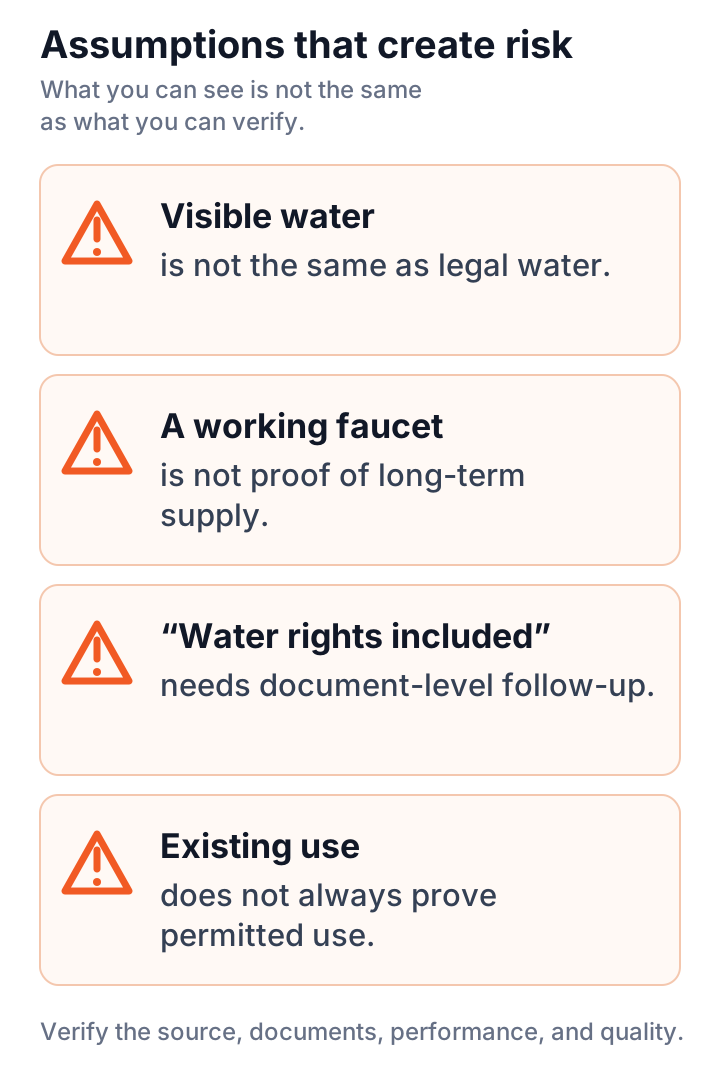
The faucet works is a statement about today. It is not a statement about where the water comes from, what the governing documents allow, how much the system can produce over a long dry summer, or what the laboratory would say about the water itself.
That is the distinction that matters on acreage. Visible water is water you can point at. Verified water is water you can document: a source you have identified, an authorization that matches the parcel, performance you have measured, and quality you have tested.
Colorado administers water under a permitting and priority system, so the water physically present on a parcel and the water a specific owner is authorized to use are two different subjects. A well can be pumping today under a permit that allows far less than a buyer is planning to do.
The purpose of water due diligence is not to find a reason to walk away. It is to replace assumptions with documents before the plans depend on them.
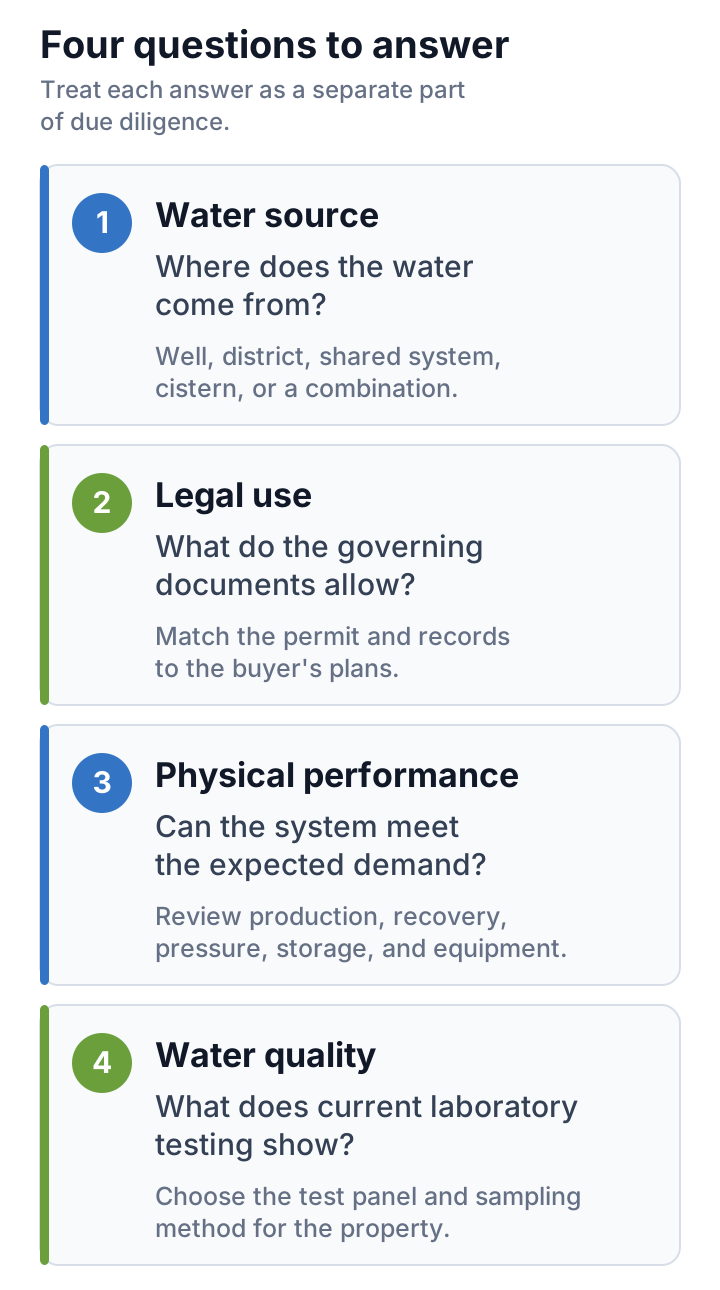
The short version: four questions, answered separately
- Water source
- Where does the water come from?
- Legal use
- What do the governing documents allow?
- Physical performance
- Can the system meet the expected demand?
- Water quality
- What does current laboratory testing show?
A permitted well, a water district, a shared system, a cistern with hauled water, or a combination.
Match the permit and the recorded documents to your plans, not to the way the property has been used.
Production, recovery, pressure, storage, and equipment condition are mechanical findings, measured separately.
Choose the test panel and the sampling method that fit the property, then read the results.
The well permit is the starting point, not the finish line
For most acreage properties served by a private well, the well permit is where documented water due diligence begins. It is the record of what the state authorized: the type of permit, the parcel it serves, the uses it allows, and the conditions attached to it.
Colorado's Division of Water Resources publishes a public well permit search, so a permit can usually be located from the address, the parcel, or the permit number. Finding a record is the easy part. Matching it is the work.
Permit-to-parcel matching asks whether the authorization actually belongs to the well and the land in front of you. Does the permit describe this parcel? Does the physical well sit where the records say it does? Do the well construction report and the pump installation report describe the equipment that is actually in the ground? Has the parcel been split, combined, or created through an exemption in a way that changes what a well may be permitted to do?
Permit-to-use matching asks a second question: does the permit allow what the buyer intends? A permit may serve one single-family dwelling and ordinary household use, and say nothing about a second residence, livestock water, irrigated acreage, a garden of a given size, a commercial activity, or filling a pond. Existing use is not proof of permitted use. If the current use and the permit disagree, the gap does not close at closing. It transfers.
A well permit, a water right, and an augmentation plan are three different things
These three terms get used as if they were interchangeable, and they are not. Each answers a different question.
A well permit is an authorization to construct and use a well in a described way. It names the parcel, the permitted uses, and the conditions. It is the document that tells you what this well is allowed to do.
A water right is a legal right to use water, administered in Colorado under priority. Rights are described in decrees and records, they carry a priority date, and they may be limited by source, amount, season, and place of use. A right may exist entirely apart from any well on the property, and a well may exist without the buyer holding a separate decreed right.
An augmentation plan is the mechanism that allows depletions to be replaced so a use can go forward without injuring senior rights. When an intended use is larger than what an ordinary permit contemplates, the answer is often not simply no. It is that the use may require an augmentation plan, a change to an existing right, or membership in a plan that already provides replacement water, along with the obligations and assessments that come with it.
Reading all three together is what turns a water conversation into a water answer. A Colorado water attorney is the right professional to interpret them for a specific property.
A walkthrough: 12 acres, and four plans that all touch water
Consider a teaching example rather than a real listing. A buyer is looking at 12 acres outside a small Front Range town. The main house is on a private well. There is a guest house near the barn, room for two horses, a large vegetable garden, and a pond at the low end of the property. The listing says water rights included.
Every one of those features is a separate water question.
The guest house asks how many dwellings the permit serves. A second residence may exceed the permit and may also run into county land-use requirements that have nothing to do with water.
The horses ask whether livestock watering is a permitted use, and in what amount. The garden asks whether outdoor irrigation is allowed at all, and if so, over what area. Some permits allow generous outdoor use, some allow a limited area, and some allow none.
The pond asks whether there is storage authorization and whether evaporation from that surface creates a depletion that has to be replaced. A pond that has been there for years is not evidence that it is authorized.
The phrase water rights included asks the most work of anyone. It does not identify which rights, from what source, in what amount, with what priority, or whether they are actually being conveyed in this transaction. It is a marketing line, and it needs document-level follow-up before it becomes a reason to buy.
None of this makes the property a bad purchase. The buyer who asks these four sets of questions early either confirms the plan, adjusts it, or budgets for the step that makes it possible. The buyer who assumes finds out later, as an owner.
Common assumptions, and what to confirm instead
| Common assumption | Why it is not proof | What to confirm instead |
|---|---|---|
| The faucets work, so the water situation is fine. | A working faucet does not confirm permit status, permitted uses, or long-term quantity. | The well permit, the well and pump reports, and current production and recovery testing. |
| There is a pond, so we have water rights. | A pond's presence does not establish that you own the water or hold the right to use or store it. | Any decreed rights, storage authorization, and augmentation obligations tied to the parcel. |
| It is horse property, so the well can support livestock. | Livestock, irrigation, and commercial uses may require additional rights or an augmentation plan. | The permitted uses named on the permit, and whether an augmentation plan is required. |
| The listing says "water rights included." | The phrase does not identify which rights, how much water, from what source, or with what priority. | The specific rights described in the documents, and whether they are actually conveyed in the sale. |
| There is a guest house, so a second dwelling is no problem. | A second residence may exceed what the permit allows or may require an augmentation plan. | The number of dwellings the permit serves, plus county land-use requirements. |
| We will just irrigate a little. | Outdoor use varies widely by permit, and some permits allow none at all. | Whether outdoor irrigation is allowed, and in what amount or area. |
- Common assumption
- The faucets work, so the water situation is fine.
- Why it is not proof
- A working faucet does not confirm permit status, permitted uses, or long-term quantity.
- What to confirm instead
- The well permit, the well and pump reports, and current production and recovery testing.
- Common assumption
- There is a pond, so we have water rights.
- Why it is not proof
- A pond's presence does not establish that you own the water or hold the right to use or store it.
- What to confirm instead
- Any decreed rights, storage authorization, and augmentation obligations tied to the parcel.
- Common assumption
- It is horse property, so the well can support livestock.
- Why it is not proof
- Livestock, irrigation, and commercial uses may require additional rights or an augmentation plan.
- What to confirm instead
- The permitted uses named on the permit, and whether an augmentation plan is required.
- Common assumption
- The listing says "water rights included."
- Why it is not proof
- The phrase does not identify which rights, how much water, from what source, or with what priority.
- What to confirm instead
- The specific rights described in the documents, and whether they are actually conveyed in the sale.
- Common assumption
- There is a guest house, so a second dwelling is no problem.
- Why it is not proof
- A second residence may exceed what the permit allows or may require an augmentation plan.
- What to confirm instead
- The number of dwellings the permit serves, plus county land-use requirements.
- Common assumption
- We will just irrigate a little.
- Why it is not proof
- Outdoor use varies widely by permit, and some permits allow none at all.
- What to confirm instead
- Whether outdoor irrigation is allowed, and in what amount or area.
Existing use is not proof of permitted use. If current use and the permit disagree, that gap belongs to the next owner.
Physical performance is a separate finding
Legal authorization tells you what you may do. Physical performance tells you what the system can actually deliver, and the two are independent. A fully permitted well can still be a weak well.
The mechanical questions are measurable. What does the well produce, and how quickly does it recover after a heavy draw? What is the pressure at the fixtures, and is there a pressure tank or storage that carries the household through peak demand? How old is the pump, and how was it installed? Is there a treatment system, and who has maintained it?
Seasonal behavior matters as much as a single reading. Ask whether the well has ever gone dry, been deepened, been hydrofractured, or had the pump lowered. Ask what the household demand actually looks like in August, when the garden, the animals, and the guests all arrive at once.
Storage changes the arithmetic. A modest producer with a cistern and a pressure system can serve a household comfortably, while a stronger well with no storage can still struggle during peak use. This is work for a licensed well and pump professional, and it belongs in the inspection period alongside the building inspection.
Clear water and tested water are not the same thing
Private well water in Colorado is generally not treated or monitored by a public utility, so the owner is the water system operator. Clarity, taste, and smell are not a substitute for laboratory results. Water can look and taste fine and still carry something a test would find, and water can look unappealing for reasons that are entirely harmless.
A useful test is chosen for the property, not ordered as a generic panel. Bacteria and nitrate are common starting points. Depending on local geology, land use, and history, a panel may also reasonably include metals such as arsenic or uranium, radionuclides, fluoride, sulfate, hardness, or other constituents. Nearby agriculture, mining history, septic systems, and fuel storage are all reasons to ask a laboratory what else belongs on the list.
Sampling method matters as much as the panel. Where the sample is drawn, whether it comes before or after treatment, and how it is handled and delivered all affect what the result means. A certified laboratory can specify the method, and state and university resources publish guidance on choosing a laboratory and interpreting a report.
Treatment is a normal outcome, not a failure. Many rural systems run filtration, softening, or disinfection. The point of testing is to know what you are treating and what it costs to keep treating it.
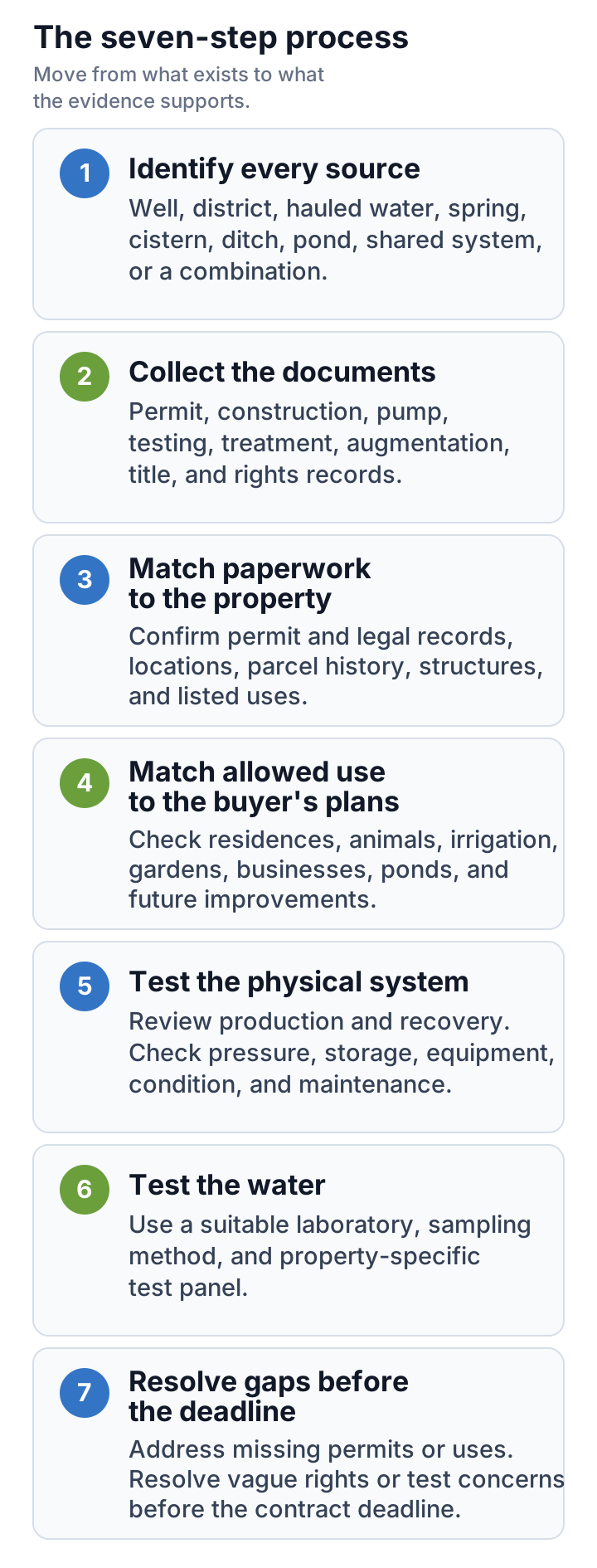
A seven-step due-diligence sequence
1. Identify every source. Determine whether the property is served by an individual well, a shared well, a water district or municipal system, hauled water and a cistern, a spring, a ditch, a pond, or a combination, and get that in writing rather than from the listing description.
2. Collect the documents. Assemble the well permit, the well construction report, the pump installation report, testing and treatment records, any augmentation plan or membership, title documents, and any recorded water-rights records.
3. Match the paperwork to the property. Confirm that the permit and the legal records correspond to this parcel, that the well is where the records say, and that the structures and listed uses match what you can see on the ground.
4. Match allowed use to your plans. Check dwellings, animals, irrigation, gardens, home businesses, ponds, and any future improvement against what the documents actually authorize.
5. Test the physical system. Review production and recovery, then check pressure, storage, equipment condition, and maintenance history with a licensed well and pump professional.
6. Test the water. Use a suitable certified laboratory, an appropriate sampling method, and a property-specific test panel rather than a generic one.
7. Resolve gaps before the deadline. Address a missing permit, an unpermitted use, a vague water-rights claim, or a testing concern while you still have contract deadlines and professional help available.
Shared wells and community systems add a second layer
When water is shared, the mechanical questions stay the same and a governance question is added: who maintains the system, how are costs divided, how are decisions made, and what happens when the pump fails.
Ask for the written shared-well agreement, the recorded easements for the well and its lines, and any maintenance or assessment history. An informal arrangement between neighbors is not a substitute for a recorded document that binds future owners.
For a district or municipal system, ask about tap availability, tap fees, connection requirements, and whether the property is inside or outside the service area. Adjacency to a system is not the same as service from it.
What this means
For buyers
- Start water due diligence at the beginning of the inspection period, not at the end. Permit research, testing, and professional review all take time.
- Describe your actual plans out loud, including irrigation, livestock, a second dwelling, a pond, or a shop, and verify each against the documents rather than against current use.
- Treat source, legal use, physical performance, and water quality as four separate written findings, and use your contract deadlines to resolve any gap.
For sellers
- Gather the permit, well and pump reports, any shared-well agreement, easements, augmentation records, and testing history before listing. Missing documents create doubt that price cannot fix.
- Avoid summarizing water rights in marketing copy. Describe what the documents say and let the buyer's professionals verify it.
For homeowners
- If your use has expanded over the years, it is worth confirming that your permit still covers it before it becomes a transaction issue.
- Keep the permit, construction report, pump records, testing results, and maintenance history in one place, and retest on a regular schedule.
What the simple explanation misses
- Acreage water is often summarized as "does the property have a well." That question is too small.
- The real subject is the relationship between a physical system, a legal authorization, and an intended use.
- Most water surprises are not mechanical failures. They are mismatches between what a buyer planned to do and what the permit or the rights actually allow.
Reader questions
Is a Colorado well permit the same as a water right?
No. A well permit is an authorization to construct and use a well in a described way on a described parcel, with specific permitted uses and conditions. A water right is a legal right to use water, administered under Colorado's priority system and described in decrees and records. A property can have a permitted well without the buyer holding a separate decreed right, and recorded rights can exist apart from any well on the land. A Colorado water attorney can read both for a specific property.
How can I find a Colorado well permit?
The Colorado Division of Water Resources publishes a public well permit search, and permits can usually be located by address, parcel, owner, or permit number. Finding the record is only the first step. The permit still has to be matched to this parcel and this physical well, and read alongside the well construction report and the pump installation report.
Does a working faucet prove that a well has enough water?
No. A working faucet shows that water reaches a fixture at that moment. It says nothing about production, recovery after a heavy draw, storage, pump age and condition, or how the system behaves during peak summer demand. Production and recovery testing by a licensed well and pump professional is the way to answer the quantity question, and storage often matters as much as raw yield.
Can a private well be used for horses or a garden?
Sometimes, and it depends entirely on the permit. Some permits allow livestock watering and a defined area of outdoor irrigation, and some allow ordinary household use only. Livestock, irrigation, commercial activity, and pond storage may require additional rights or an augmentation plan. Existing horses or an established garden are not evidence that those uses are permitted.
Should a buyer test private well water?
Yes. Private wells are generally not treated or monitored by a public utility, so the owner operates the water system. Clarity, taste, and smell are not a substitute for laboratory results. Bacteria and nitrate are common starting points, and local geology, land use, and history may justify a broader panel. Use a certified laboratory, ask which panel fits the property, and follow the laboratory's sampling instructions.
What does "water rights included" mean in a listing?
On its own, very little. The phrase does not identify which rights, from what source, in what amount, with what priority, or whether they are actually being conveyed in the transaction. Treat it as a prompt for document-level follow-up: ask for the records that describe the rights, confirm how they are handled in the contract, and have a Colorado water attorney interpret them before you rely on them.
The Granger takeaway
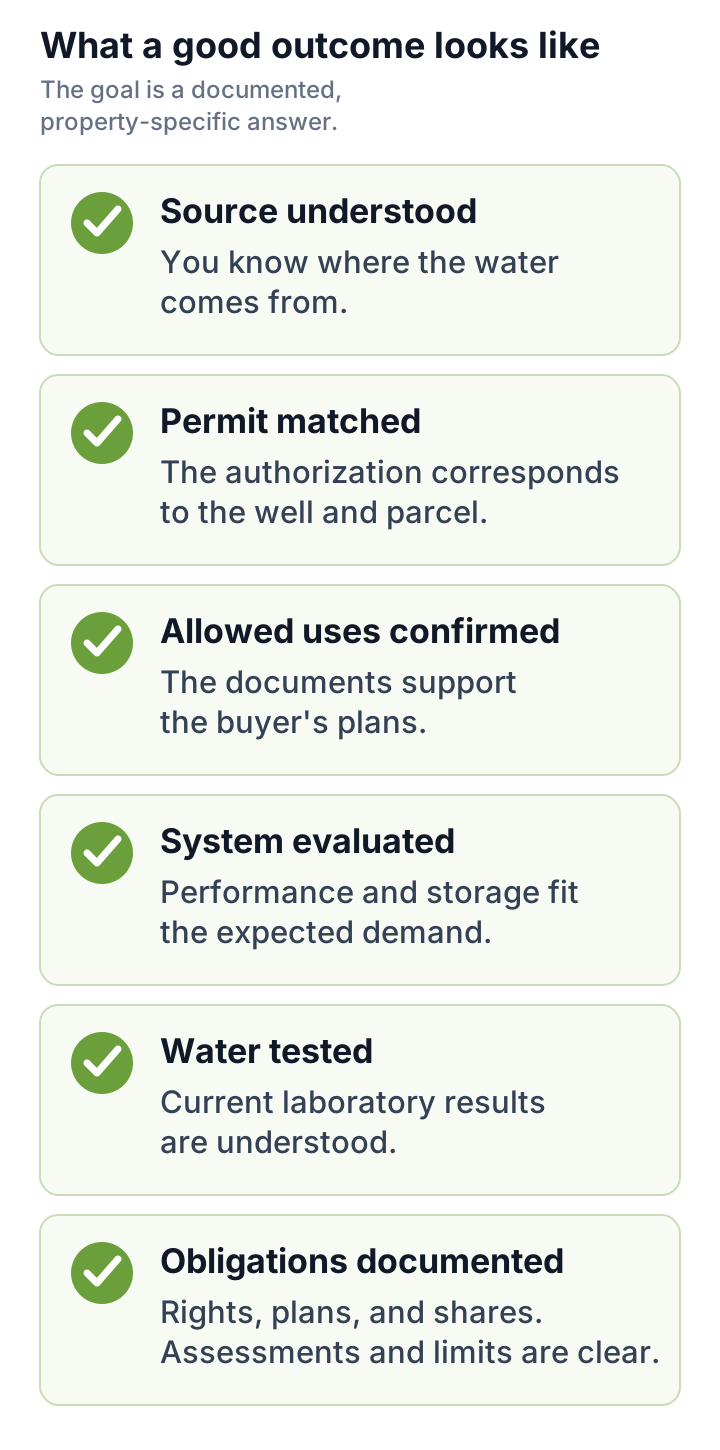
On acreage, I care less about how the water looks and more about whether three documents agree: the permit, the parcel, and the plan. When they line up, the property can be evaluated on its merits. When they do not, the gap does not close at closing. It transfers. Good water decisions protect the investment today and for the owners who come after.
Bring the parcel, and we will build the question list.
If you are evaluating a specific acreage property, the useful first step is to assemble the well permit, well and pump reports, any shared-well agreement, recorded easements, augmentation records, and the parcel history. I can organize the real estate questions, then a Colorado water attorney, a well and pump professional, and a certified laboratory can answer the ones that belong to them.
Sources and methodology
This explainer was reviewed against Colorado Division of Water Resources guidance on well permitting and water-rights administration, the state's public well permit search, Colorado Department of Public Health and Environment guidance on private drinking-water wells and laboratory testing services, Colorado State University Extension and Water Knowledge guidance on selecting an analytical laboratory and on how water rights are administered, Water Education Colorado's explanation of augmentation and replacement plans, and the Colorado Division of Real Estate's published contracts and forms, as available on September 1, 2026. It describes the general framework and the questions that deserve professional review. It does not state the permit status, allowed uses, production, water quality, or water rights of any specific property, and it is not a prediction of how any permitting authority, court, or water division will treat an individual parcel. The 12-acre property described above is a teaching example rather than a real listing. The infographic that prompted this report included survey-style percentages with no identifiable source, so those figures were deliberately excluded.
- Colorado Division of Water Resources, well permit search tool
- Colorado Division of Water Resources, well permitting
- Colorado Division of Water Resources, water rights administration
- Colorado Department of Public Health and Environment, drinking water and private wells
- Colorado Department of Public Health and Environment, water testing services
- Colorado State University Extension, selecting an analytical laboratory
- Water Education Colorado, augmentation and replacement plans
- CSU Water Knowledge, administration of water rights
- Colorado Division of Real Estate, real estate broker contracts and forms
Related reading
- What I Would Watch Before Buying in This MarketA calmer way to evaluate risk before making an offer.
- What Buyer Leverage Actually Looks LikeHow usable leverage shows up in contract terms, not just price.
- A Short Sale Can Release the House Without Releasing the DebtAnother case where the documents matter more than the headline.
This report is for educational and informational purposes only. It is not legal, engineering, environmental, water-rights, lending, title, or financial advice, and it is not a property valuation or an assurance that any well, water source, or water right will support a particular use. Water availability, rights, permitted uses, and quality vary by property. Buyers and sellers should consult a Colorado water attorney, a licensed well and pump professional, a certified testing laboratory, the applicable permitting authority, and their managing broker. Jackson Granger is a licensed Colorado real estate broker, FA.100105702, affiliated with Coldwell Banker Realty.