0180238
Central Park
The premium planned lifestyle
Median sold price
$852,500
- Median days
- 5
- Sold to list
- 100.6%
A local look at Central Park prices, Park Hill character, Original Aurora affordability, and the tradeoffs buyers should understand before chasing the next neighborhood story.
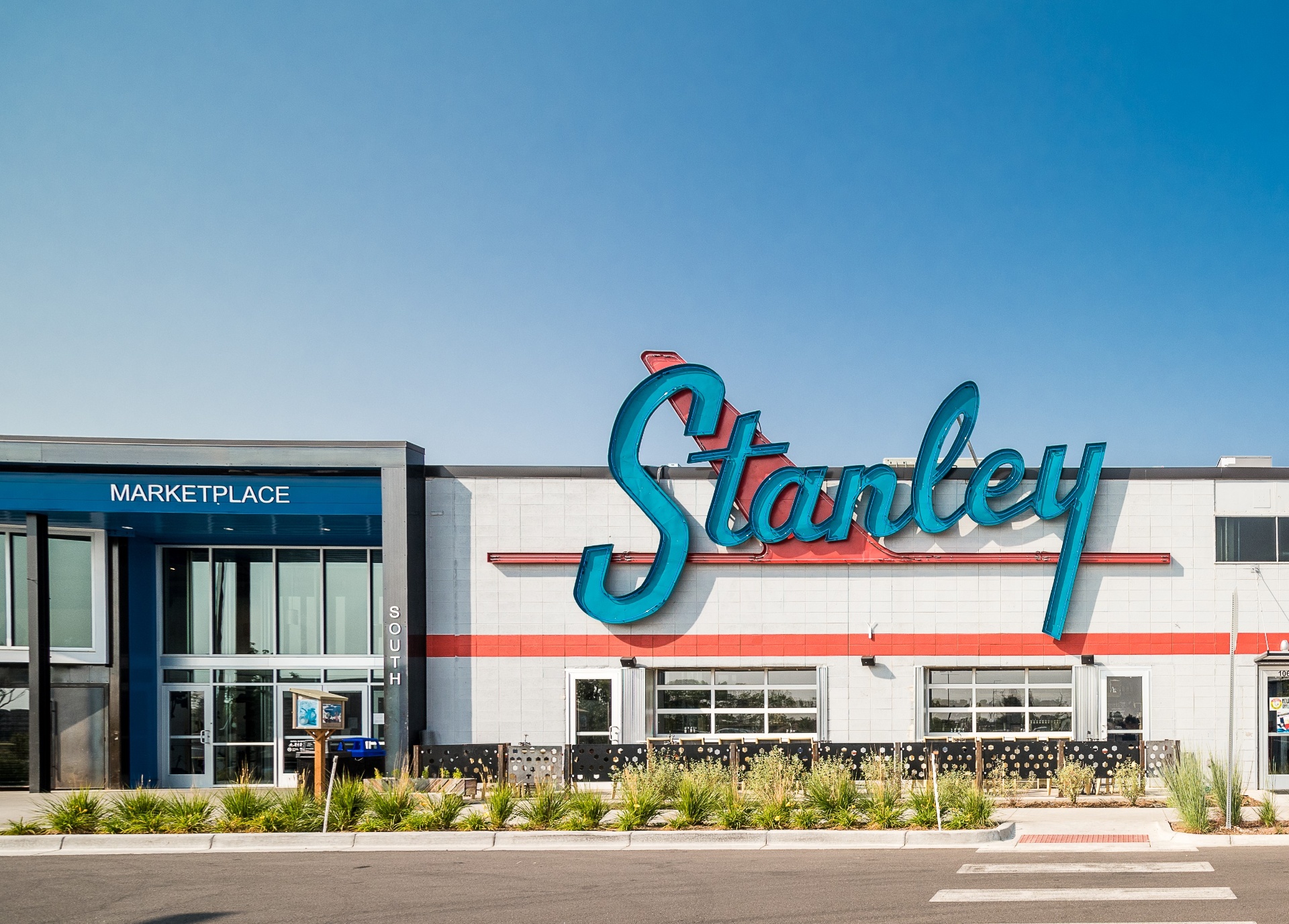
Can Stanley Marketplace help buyers rethink west Aurora?
One sits at the planned-premium end of the market. One holds Denver's older established character. One trades at a meaningfully lower price, with more block-by-block variation.
The premium planned lifestyle
The established Denver character market
More affordable, more variable
Source · REcolorado MLS, April 2026 single-family
A lot of Denver buyers are not just asking what they can afford. They are asking something more specific.
Where can I still find access, restaurants, parks, culture, and a real sense of place without paying the full premium for neighborhoods that already feel discovered?
That question keeps surfacing around Central Park, Park Hill, Lowry, East Colfax, Original Aurora, and the streets around Stanley Marketplace. It is not an easy one to answer.
For this report I am using 80238, 80207, and 80010 as comparison points. ZIP codes are imperfect and do not match neighborhood lines cleanly. They do help frame three different housing stories sitting close to each other on the map: Central Park's planned premium, Park Hill's established character, and 80010's more affordable, more variable mix.
Stanley matters in that conversation because affordability by itself is rarely enough. Buyers also need a way to picture daily life. People have been to Stanley for dinner at Annette, a beer at Cheluna, a workout, a school event, or a weekend out. They understand it before they understand the housing data around it.
Stanley Marketplace is not a shopping center in the traditional sense. It functions more like a community anchor: a name buyers already know and a place they have already been.
It sits at the edge of several different housing stories at once. To the west and northwest, Central Park and Westerly Creek. To the south, Lowry, East Colfax, and the long stretch of Park Hill. To the east, Original Aurora, North Aurora, Del Mar Parkway, and the Anschutz/Fitzsimons campus, which employs roughly 25,000 people within a short drive of Stanley's front door.
For a buyer who has been to Stanley a few times, the surrounding area starts to feel less abstract. Instead of a name on a map, it becomes a place with restaurants, a brewery, a school, trails, and an employer they can picture.
The line between Denver and Aurora runs along Dallas Street, just west of Stanley. Stand in the parking lot on a Saturday morning and you can see how short that line really is. On one side, Central Park's newer rooftops and the trees of Westerly Creek. On the other, the older bungalows and ranches of 80010, with East Colfax within walking distance and Anschutz a few minutes east.
Inside Stanley, people are lined up for coffee, breakfast at Rosenberg's, or a slow lunch at Comida. Kids are running between tables. The crowd looks like Central Park, Park Hill, Lowry, and Aurora all at once, which is more or less the truth of who lives nearby.
Walk two blocks in any direction and the housing changes again. That is the part the data cannot fully show.
Central Park, Park Hill, and 80010 each offer a different mix of access, housing, character, and price. The useful question is not which is best. It is what each one is actually asking of a buyer.
Buyers do not fall in love with ZIP codes. They fall in love with a life.
The premium planned lifestyle
Central Park is the polished, planned version of the lifestyle many Denver buyers are chasing.
RPR shows a median estimated value of $807,000 in 80238, down 0.8% over the last twelve months. The median list price is $975,000, up 8.9% year over year.
April 2026 single-family sales came in at a $852,500 median, with 2.11 months of inventory, a 100.6% sold-to-list ratio, and 5 median days on market. Median home age is 14 years. 71% of homes are owner-occupied.
Newer construction, parks, trails, schools, and walkable retail make it easy for buyers to picture daily life here. When the home and the block line up, Central Park still moves quickly.
Central Park is no longer the affordability answer for most buyers. It is the premium answer.
The established Denver character market
Park Hill trades on architecture, tree canopy, and a long-settled sense of place.
RPR shows a median estimated value of $627,000 in 80207, down 4.4% over twelve months, against a $647,000 median list price that is up 7.4% year over year.
April 2026 single-family sales came in at a $627,500 median, with 2.32 months of inventory, a 98.8% sold-to-list ratio, and 14 median days on market. Median home age is 81 years. 77% owner occupancy.
South Park Hill and North Park Hill carry different buyer dynamics, and 80207 does not perfectly define the whole neighborhood. The broader picture is an older housing market where condition does most of the talking. Roofs, sewer lines, electrical, layouts, basements, and insurance all shape the real cost of ownership.
Park Hill has emotional pull. It also asks buyers to understand older homes.
More affordable, more variable
This is the area around Stanley Marketplace, North Aurora, Del Mar Parkway, East Colfax, and the Anschutz/Fitzsimons campus.
RPR shows a median estimated value of $419,000 in 80010, down 2.2% over twelve months. The median list price is $400,000, almost flat year over year at 0.2%.
April 2026 single-family sales came in at a $410,750 median, with 1.82 months of inventory, a 98% sold-to-list ratio, and 23 median days on market. Median home age is 69 years. Owner occupancy is 41%. Median household income is $60,146.
This is a different market than the other two. More affordable, more varied, more dependent on the specific street. Anschutz and Fitzsimons sit at the edge of it, employing tens of thousands of people who increasingly want to live closer to work.
80010 is not a cheap version of Central Park. It is its own market, and Stanley has made it easier for buyers to read.
Three zip codes, three honest snapshots of how each market is trading right now.
Source · REcolorado MLS, April 2026
Central Park homes are selling in 5 days. 80010 homes are taking 23. The gap is not just price. It is buyer confidence.
A Central Park buyer is largely buying a known quantity: similar housing stock, similar lots, similar street experience. An 80010 buyer is buying a specific block. Two homes a quarter mile apart can sit on very different streets, with very different condition, and very different futures.
That is the work in this part of the market. The price is lower. The homework is not.
Denver buyers still want access, restaurants, parks, employment, and a place that feels like it has a future. Many of the neighborhoods that clearly offer those things have become expensive. So buyers start looking around the edges.
They look near Central Park without paying Central Park prices. They look near Park Hill without paying Park Hill prices. They look around Stanley, Anschutz, and East Colfax, where a Bus Rapid Transit corridor is being planned, and ask whether the tradeoffs make sense.
They often do. They also come with real work. Some homes in 80010 are well cared for. Others need significant attention. Some blocks feel settled. Others feel mid- transition. With 41% owner occupancy, the mix changes faster than it does in Central Park or Park Hill.
Older homes can be wonderful, but they reward careful review: roof, sewer line, foundation, drainage, electrical, HVAC, windows, insulation, and any prior renovation. Cosmetic updates do not always tell the full story.
Investment can create energy. It can also create friction around displacement, construction, and a changing identity. The thoughtful approach is not to chase the story. It is to study the specific home and the specific street.
If you are a buyer priced out of Central Park or stretching to make Park Hill work, the area around Stanley Marketplace and west Aurora may be worth understanding more carefully.
That does not mean it is right for everyone. It means the comparison deserves more nuance than it often gets.
It tends to fit buyers who want proximity to Central Park, Park Hill, Lowry, East Colfax, Stanley, and Anschutz at a lower entry point, and who are comfortable evaluating older homes one street at a time. The right question is not whether this is the next version of somewhere else. It is whether this specific block works for you.
That is a better way to buy in a variable market.
For sellers in Original Aurora, North Aurora, Del Mar Parkway, and the broader west Aurora area, a more recognizable surrounding story helps. It does not replace pricing, preparation, condition, and presentation.
Buyers may be more open to the area than they were several years ago, especially if they already spend time at Stanley or commute to Anschutz/Fitzsimons. Still, they are selective. They are comparing your home not only to other homes in 80010, but also to smaller homes, condos, townhomes, and older properties across nearby Denver and Aurora neighborhoods.
A stronger neighborhood narrative helps buyers pay attention. A well-prepared listing helps them believe in the value.
The area around Stanley is not interesting because something is guaranteed to happen. It is interesting because three different versions of Denver living already sit within a few miles of each other, and Stanley gives buyers a place to stand while they look at all three.
The interesting thing about Stanley is not what it changes. It is what it lets people see.
No. Central Park is a newer, planned, premium market. West Aurora and Original Aurora are older, more varied, and generally more affordable. They may share proximity to similar amenities, but they are different markets.
Stanley Marketplace gives the surrounding area a recognizable lifestyle anchor. Buyers often need more than affordability. They need to picture daily life, and Stanley helps create that point of reference.
It can be worth studying, but it is not a direct substitute. 80010 may offer lower entry points, but it also requires more block-by-block review, condition analysis, and comfort with change.
Buyers should pay attention to the specific block, home condition, older systems, commute, nearby amenities, safety considerations, repair budget, and long-term neighborhood direction.
A stronger neighborhood story can help, but it does not replace pricing, preparation, condition, and presentation. Buyers need a clear reason to believe in the value.
If you are trying to make sense of a specific neighborhood, home, or pricing decision, I am always happy to be a resource.
The right answer usually depends on the block, the home, and the timing.
Coldwell Banker Global Luxury · Colorado License FA.100105702